Which Mishna Berura Should You Buy? Dirshu, Oz Vehadar, Menukad and English Compared
Published November 12, 2026
Add 1800Eichlers as a preferred source on Google
The Mishna Berura is the main guide to the halachos of daily life, tefillah, Shabbos and Yom Tov for most Ashkenazi homes, and it comes in more editions than almost any other sefer. Dirshu, Oz Vehadar, menukad, pocket and English editions all print the same text in very different ways. This guide explains what the Mishna Berura is and how to choose the edition that fits the way you learn.
Quick Answer
The Mishna Berura is the Chofetz Chaim's commentary on Orach Chaim, the first section of the Shulchan Aruch, published in six volumes between 1884 and 1907. Choose a Dirshu edition if you want later poskim on the page or follow Daf HaYomi B'Halacha, an Oz Vehadar or menukad edition for a clear standard text, and Ohr Olam if you want English.
Key Observations
- Scope: the Mishna Berura covers Orach Chaim only, which is daily conduct, tefillah, Shabbos and Yom Tov.
- Three layers: each page has the Mishna Berura, the Biur Halacha for deeper analysis and the Shaar HaTziyun for sources.
- Dirshu editions: built for the Daf HaYomi B'Halacha program and add the rulings of later poskim.
- Readable editions: Oz Vehadar and menukad editions offer a clear standard text, some with nekudos.
- English: the Ohr Olam edition translates the text and is sold in smaller volumes.
This table matches each type of edition to the learner it suits.
| Edition | Best for | Examples at 1800 Eichlers |
|---|---|---|
| Dirshu | Daf HaYomi B'Halacha and learning with later poskim | Dirshu Mishna Berura six volume set and single volumes |
| Dirshu Daf Yomi B'Halacha | Following the daily program in small volumes | Daf Yomi B'Halacha boxed set in 19 volumes |
| Oz Vehadar | A clear standard text for home and beis medrash | Oz Vehadar single volumes and six volume set |
| Menukad and pocket | Students, travel and easier reading | Oz Vehadar Menukad pocket size set, Menukad large volumes |
| English | English speakers learning the text | Ohr Olam volumes |
Source: 1800 Eichlers category page, checked November 11, 2026.
Already know which edition you want? Browse every Mishna Berura edition at 1800 Eichlers, from Dirshu sets to English volumes.
What is the Mishna Berura?
The Mishna Berura is a commentary on Orach Chaim written by Rabbi Yisrael Meir Kagan, known as the Chofetz Chaim, who lived from 1838 to 1933. It explains each halacha in the Shulchan Aruch and the Rema, brings the views of the later poskim and gives a practical conclusion. The six volumes were published between 1884 and 1907.
Because it covers Orach Chaim only, the sefer deals with the halachos a person meets every day. That includes waking up, tzitzis and tefillin, davening, brachos, Shabbos, Pesach, the other Yamim Tovim and fast days. It does not cover kashrus, monetary law or marriage, which are in the other sections of the Shulchan Aruch.
For many Ashkenazi families the sefer is the first place to look for a halacha in Orach Chaim. For a practical question, it remains best to ask your rav.
What is on a page of Mishna Berura?
A page of Mishna Berura prints the Shulchan Aruch and Rema in the center, with the Mishna Berura commentary and two further works by the Chofetz Chaim around it. Standard editions also print earlier commentaries on the same page.
- Mishna Berura: the main commentary, explaining each halacha and giving the practical conclusion.
- Biur Halacha: a deeper analysis of selected halachos, for those who want the reasoning.
- Shaar HaTziyun: the sources behind the commentary's statements.
- Earlier commentaries: works such as the Be'er Heitev and Sha'arei Teshuvah, printed alongside.
The sefer follows the 697 simanim of Orach Chaim, so the siman numbers match the Shulchan Aruch and the Tur. To see how the four sections fit together, read our guide on how to choose a Tur Shulchan Aruch set.
What is the Dirshu Mishna Berura?
The Dirshu Mishna Berura is an edition published by Dirshu that adds the rulings of later poskim to the classic text. It is closely tied to Daf HaYomi B'Halacha, Dirshu's daily program that covers a page of Mishna Berura each day, together with later poskim and mussar from the Sefer Chofetz Chaim.
At 1800 Eichlers, Dirshu comes in three forms, so you can match the format to the way you learn.
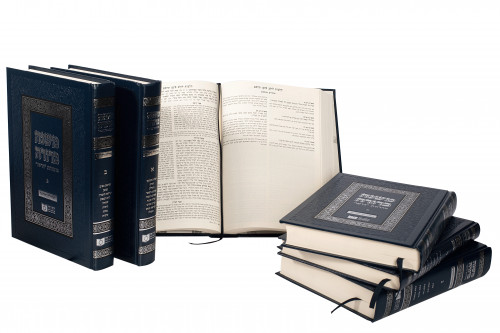
- Full set: the Dirshu Mishna Berura six volume set covers all of Orach Chaim.
- Single volumes: buy only the volume you are learning, such as Mishna Berura Volume 3 from Dirshu.
- Daily program set: the Dirshu Mishnah Berurah Daf Yomi B'Halacha boxed set splits the text into 19 smaller volumes.
Oz Vehadar, menukad and pocket editions
Oz Vehadar editions offer a clear standard Mishna Berura without the extra Dirshu notes, which many people prefer for steady learning. You can buy single volumes, such as Oz Vehadar Volume 3, or the Oz Vehadar six volume set.
Menukad editions
Menukad editions print the text with nekudos, which helps students and anyone still building fluency. The Mishnah Berurah Menukad Volume 1 in large size from Oz Vehadar is one option, with a bigger page for easier reading.
Pocket editions
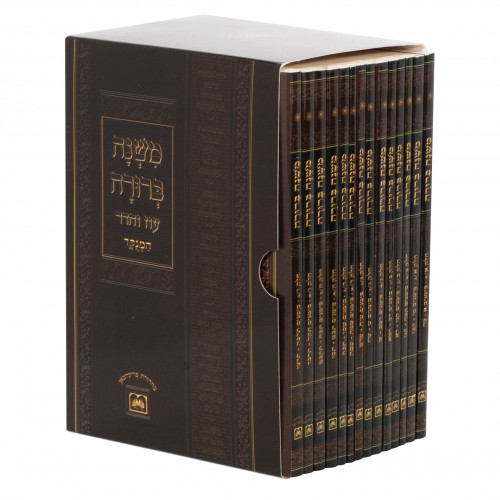
Pocket editions split the six volumes into smaller books you can carry. The Oz Vehadar Menukad pocket size set comes in 14 volumes, so you only carry the part you are learning.
Is there a Mishna Berura in English?
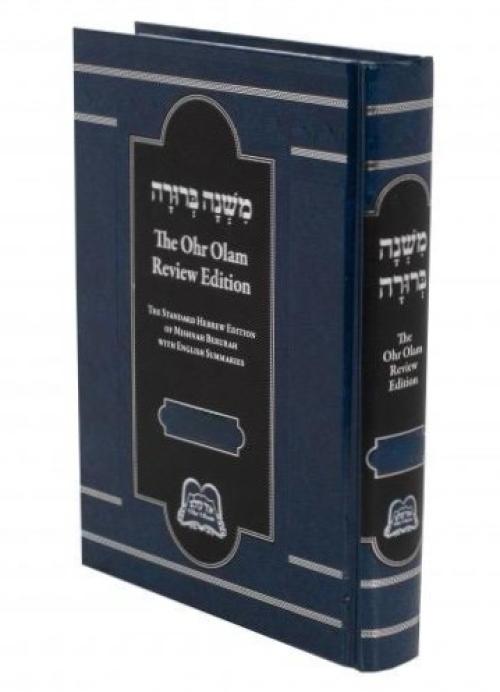
Yes. The Ohr Olam edition translates the sefer into English alongside the Hebrew text. At 1800 Eichlers it is sold as individual volumes, such as Ohr Olam Volume 1(e), so you can start with the simanim you are learning now.
English editions are a good fit for baalei teshuva, for learning with a chavrusa who is newer to the text, and for anyone who wants to check their understanding of a difficult line. Many learners keep a Hebrew edition for the beis medrash and an English volume at home.
Compare Mishna Berura editions side by side
| Your situation | Edition to look at | Why |
|---|---|---|
| You follow Daf HaYomi B'Halacha | Dirshu Daf Yomi B'Halacha set | Small volumes that follow the daily program |
| You want later poskim on the page | Dirshu six volume set | Adds later rulings to the classic text |
| You want a clean standard text | Oz Vehadar volumes or set | Clear print without extra notes |
| You want nekudos or travel size | Menukad large or pocket set | Easier reading or easy to carry |
| You learn in English | Ohr Olam volumes | English translation with the Hebrew text |
Which volume of Mishna Berura should you buy first?
If you are buying one volume, start with the part of Orach Chaim you will use most. Volume 1 opens with the halachos of the morning, tzitzis, tefillin and davening, and the halachos of Shabbos begin in Volume 3.
- Daily halacha: start with Volume 1 for the morning routine and davening.
- Shabbos: start with Volume 3 if your chabura is learning hilchos Shabbos.
- Before Yom Tov: buy the volume that covers the coming Yom Tov, so you can learn the halachos in time.
Buying single volumes also spreads the cost of a set over time, and you can complete the set in the same edition later. Check that each new volume matches the edition, size and binding you already own, so your shelf stays uniform.
Is a Mishna Berura set a good gift?
A full Mishna Berura set is one of the classic gifts for a chosson or a bar mitzvah bochur, because he will use it for the rest of his life. A pocket set suits a yeshiva bochur who learns in different places, and an Ohr Olam volume suits an English speaker starting to learn halacha. For personalization ideas, see our guide to seforim stamps and custom leather.
How to start learning Mishna Berura
Start with the simanim you use most, such as the morning halachos or the halachos of Shabbos, and learn a little every day. Many people join a daily program because a fixed schedule keeps the learning going.
- Choose a program: Daf HaYomi B'Halacha covers a page a day, or set your own pace siman by siman.
- Choose an edition: match it to the program, such as Dirshu for Daf HaYomi B'Halacha.
- Find a chavrusa or shiur: learning with someone helps with the Biur Halacha and harder lines.
- Ask practical questions: take what you learn to your rav when it applies to a real situation.
New to learning halacha? The Kitzur Shulchan Aruch is a shorter place to start, and many people learn it before or alongside the Mishna Berura.
Checklist before you order a Mishna Berura
Confirm the edition, format and language before you check out, so the set fits your learning.
| Check | Why it matters |
|---|---|
| Dirshu or a standard edition? | Dirshu adds later poskim and follows Daf HaYomi B'Halacha |
| Full set or single volume? | A single volume lets you start with what you are learning now |
| Plain or menukad? | Nekudos help students and newer readers |
| Full size, large or pocket? | Decides where you can carry it and learn |
| Hebrew or English? | Ohr Olam gives an English translation |
| Is it a gift? | A full matching set suits a chosson or a bar mitzvah |
For more on buying seforim online, read our guide on how to choose the best Judaica store online.
Shop Mishna Berura editions at 1800 Eichlers
1800 Eichlers, the online store of Eichler's of Boro Park, carries the sefer in Dirshu, Oz Vehadar, menukad, pocket and English editions, plus later works such as Mishna Berura HaMevuar. Browse the full Mishna Berura collection, see Shulchan Aruch seforim, or contact the store with a question before you order.
Frequently Asked Questions
- Who wrote the Mishna Berura?
Rabbi Yisrael Meir Kagan, known as the Chofetz Chaim, wrote the Mishna Berura. He lived from 1838 to 1933, and the six volumes were published between 1884 and 1907.
- What does the Mishna Berura cover?
The Mishna Berura is a commentary on Orach Chaim only. It covers daily conduct, tefillah, brachos, Shabbos, Yom Tov and fast days, following the 697 simanim of Orach Chaim.
- What is the difference between Dirshu and Oz Vehadar Mishna Berura?
Dirshu editions add the rulings of later poskim and are built around the Daf HaYomi B'Halacha program. Oz Vehadar editions give a clear standard text without the extra Dirshu notes.
- What are the Biur Halacha and Shaar HaTziyun?
Both are works by the Chofetz Chaim printed on the Mishna Berura page. The Biur Halacha gives deeper analysis of selected halachos, and the Shaar HaTziyun lists the sources.
- Is there a Mishna Berura in English?
Yes. The Ohr Olam edition translates the Mishna Berura into English with the Hebrew text, and 1800 Eichlers sells it as individual volumes.
- What is Daf HaYomi B'Halacha?
Daf HaYomi B'Halacha is Dirshu's daily program that covers a page of Mishna Berura each day, together with later poskim and mussar from the Sefer Chofetz Chaim.