Kitzur Shulchan Aruch: Editions, Kitzur Yomi and How to Choose
Published November 12, 2026
Add 1800Eichlers as a preferred source on Google
The Kitzur Shulchan Aruch is the halacha sefer many families keep closest at hand, because it puts the practical halachos of daily Jewish life into one short, readable book. This guide explains what the Kitzur is, how it relates to the full Shulchan Aruch, how the Kitzur Yomi cycle works and how to choose the right edition for your home, school or travel.
Quick Answer
The Kitzur Shulchan Aruch is a concise summary of practical halacha written by Rabbi Shlomo Ganzfried and first published in 1864. Its 221 simanim cover daily conduct, tefillah, Shabbos, Yom Tov, kashrus and more in plain Hebrew. Many people learn it through Kitzur Yomi, a daily cycle that finishes the sefer in about a year.
Key Observations
- Written for everyone: Rabbi Ganzfried wrote the Kitzur so a layperson could learn the halachos needed for daily life.
- Short by design: the full sefer has 221 simanim, compared with the four large sections of the Shulchan Aruch.
- Daily learning: Kitzur Yomi covers a short portion each day and finishes the sefer in about one year.
- Edition matters: choose between Hebrew, vowelized, English, Yiddish, pocket and multi volume editions.
- Later rulings: some editions add notes where later poskim, such as the Mishna Berura, rule differently, so ask your rav for practical questions.
This table shows the main types of editions and who each one suits.
| Edition type | Best for | Examples at 1800 Eichlers |
|---|---|---|
| English with Hebrew text | English speakers and Kitzur Yomi learners | Kleinman Edition Kitzur Shulchan Aruch Yomi personal size set |
| Vowelized Hebrew | Students and readers who want nekudos | Kitzur Shulchan Aruch Menukad from Oz Vehadar |
| Pocket size | Learning on the go, in shul or on the bus | HaMeule pocket size and leatherette pocket size editions |
| Midsize and annotated Hebrew | Home learning with notes | Shay Lamora midsize and Hame'ulah editions |
| Yiddish and student editions | Yiddish speakers and cheder or school use | Yiddish full set and the L'Talmidim edition |
Source: 1800 Eichlers product listings, checked November 11, 2026.
Looking for a copy now? Browse Shulchan Aruch seforim at 1800 Eichlers, including Kitzur editions in Hebrew, English and Yiddish.
What is the Kitzur Shulchan Aruch?
The Kitzur is an abridged code of halacha by Rabbi Shlomo Ganzfried, who served as a dayan in Ungvar. "Kitzur" means "short," and the sefer condenses the practical rulings of the Shulchan Aruch into a book a working person could learn. It was first published in 1864 and went through many printings during the author's lifetime.
Rabbi Ganzfried based the Kitzur on the Shulchan Aruch with the glosses of the Rema, and he drew on later poskim, including the Chayei Adam and the Shulchan Aruch HaRav. The result follows Ashkenazi practice and is written in clear Hebrew without long discussion of sources.
The Kitzur is a summary, not a replacement for asking a shaila. Where a question is not simple, the right step is still to ask your rav.
What does the Kitzur Shulchan Aruch cover?
The Kitzur covers the halachos a person needs day to day, arranged in 221 simanim. Most of the material comes from Orach Chaim and Yoreh Deah, with selected halachos from the other sections of the Shulchan Aruch.
- Daily conduct: waking in the morning, netilas yadayim, dressing, tzitzis and tefillin.
- Tefillah and brachos: davening, kriyas Shema and the brachos on food.
- Shabbos and Yom Tov: the halachos of Shabbos, the Yamim Tovim, fast days and Chanukah and Purim.
- Kashrus and the home: meat and milk, salting, mezuzah and other halachos of the house.
- Life cycle and between people: business ethics, tzedakah, honoring parents, and the halachos of mourning.
Because the simanim are short, you can learn one siman in a few minutes. That makes the Kitzur a natural fit for a daily seder at home or after davening.
Kitzur Shulchan Aruch vs Shulchan Aruch vs Mishna Berura
The Kitzur gives short practical rulings, the Shulchan Aruch is the full code with commentaries, and the Mishna Berura is a detailed commentary on Orach Chaim. Many people start with the Kitzur and later learn the Mishna Berura or the full Shulchan Aruch for depth.
This table compares the three seforim.
| Feature | Kitzur Shulchan Aruch | Shulchan Aruch | Mishna Berura |
|---|---|---|---|
| Author | Rabbi Shlomo Ganzfried | Rabbi Yosef Karo, with the Rema | Rabbi Yisrael Meir Kagan, the Chofetz Chaim |
| Scope | Daily halacha from all areas, 221 simanim | All of halacha in four sections | Orach Chaim only |
| Style | Short rulings in plain Hebrew | Rulings with classic commentaries | Detailed explanation with sources |
| Best for | Daily learning and quick review | In depth learning and reference | Halacha of daily life, Shabbos and Yom Tov |
The Kitzur was written before the Mishna Berura, so some editions note where the Mishna Berura and other later poskim rule differently. For a full overview of the larger code, read our guide to choosing a Tur Shulchan Aruch set.
What is Kitzur Yomi and how do you start?
Kitzur Yomi is a daily learning cycle that covers a short section of the Kitzur each day and finishes the sefer in about a year. The schedule is arranged so the halachos of each Yom Tov come up before the Yom Tov itself.
- Pick a time: a few minutes after Shacharis or before bed works for many people.
- Pick an edition: any standard edition works, and some editions print the daily schedule inside.
- Start today: you can join the cycle at any point and continue around to where you began.
- Review: mark difficult halachos and ask your rav about practical questions.
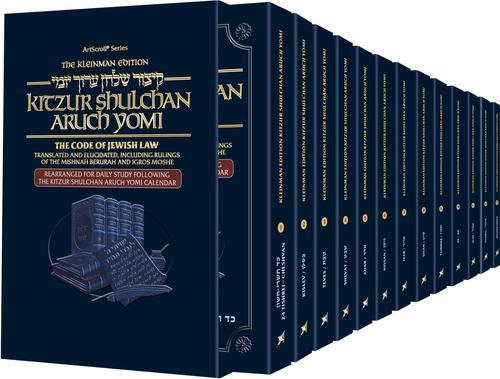
Two editions at 1800 Eichlers are built around daily learning. The Kleinman Edition Kitzur Shulchan Aruch Yomi comes as a 13 volume personal size set, and the Kitzur with Luach Yomi from Ben Tziyon Scharf includes a daily learning calendar.
How to choose a Kitzur Shulchan Aruch edition
Choose a Kitzur Shulchan Aruch edition by language, print style, size and the notes you want on the page. The best edition is the one you will open every day, so start with where and how you plan to learn.
English editions
English editions place a translation beside or below the Hebrew text, which helps readers who are still building their Hebrew. The Kleinman Edition at 1800 Eichlers is arranged for Kitzur Yomi and notes where later poskim, including the Mishna Berura, differ from the Kitzur. If you want English for daily learning, this is the place to start.
Hebrew and vowelized editions
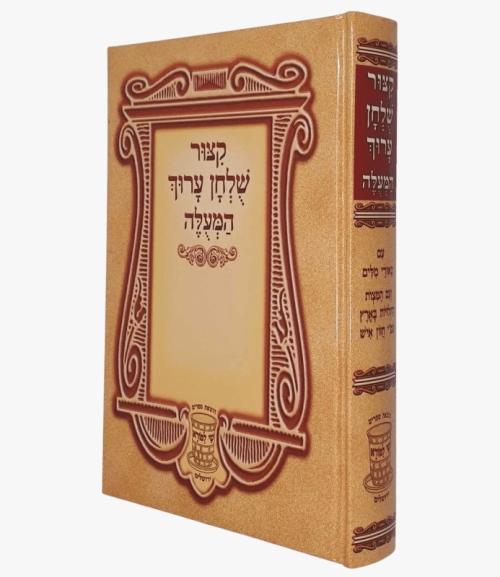
Hebrew editions come plain or menukad, meaning with nekudos. The Kitzur Shulchan Aruch Menukad from Oz Vehadar is vowelized for easier reading, and the Hame'ulah edition is another Hebrew edition in the collection. Students can look at Kitzur L'Talmidim from Oz Vehadar.
Pocket and midsize editions
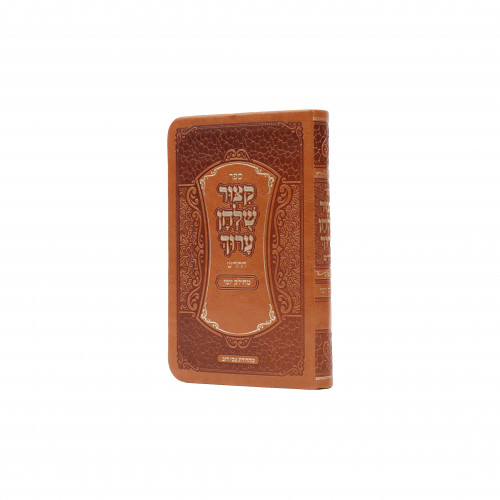
Pocket editions fit in a jacket or tallis bag, so you can learn a siman on the bus or between Mincha and Maariv. Options include the HaMeule pocket size edition from Sifrei Abramowitz and the leatherette pocket size edition from Ben Tziyon Scharf. The Shay Lamora midsize edition gives a larger page in one volume.
Yiddish and Sephardic options
Yiddish speakers can choose the Yiddish full set from Shira-Mishor. Sephardic readers often learn from Sephardic halacha summaries, such as the Kitzur Chazon Ovadya in English, so ask your rav which sefer fits your family's practice.
Compare the options side by side
| Your situation | Edition to look at | Why |
|---|---|---|
| You want to start Kitzur Yomi in English | Kleinman Edition Yomi set | Small volumes arranged for the daily cycle |
| You read Hebrew but want nekudos | Menukad edition | Vowelized text for easier reading |
| You learn on the commute | Pocket size edition | Light enough to carry every day |
| You want a daily calendar inside | Kitzur with Luach Yomi | The schedule is printed in the sefer |
| You are buying for a cheder or school | L'Talmidim edition | Made for students |
Is the Kitzur Shulchan Aruch a good gift?
A Kitzur Shulchan Aruch is a practical gift because the recipient can use it every day for years. It suits a bar mitzvah bochur, a chosson setting up a new home, or anyone starting to learn halacha on their own.
- Bar mitzvah: a pocket edition he can keep in his tallis and tefillin bag.
- New home: a full size edition for the dining room shelf, next to the Chumash and siddur.
- English speaker: the Kleinman Edition Yomi set, which gives a clear daily plan.
Planning a bar mitzvah? See our bar mitzvah and bat mitzvah guide for more gift and preparation ideas.
Checklist before you order a Kitzur
Confirm the language, size and features before you check out, so the edition you receive fits the way you learn.
| Check | Why it matters |
|---|---|
| Hebrew, English or Yiddish? | The language decides how easily you can learn every day |
| Plain or menukad? | Nekudos help students and newer readers |
| Single volume, set or pocket? | Decides where you can carry it and learn |
| Notes on later poskim? | Helps you see where practice today differs |
| Daily schedule included? | Useful if you plan to join Kitzur Yomi |
| Is it a gift? | Consider personalization or a full size edition for the home |
Buying seforim for a school year? Our guide on how to read a seforim list and buy the correct edition explains how to match the edition a school asks for.
Shop Kitzur Shulchan Aruch editions at 1800 Eichlers
1800 Eichlers, the online store of Eichler's of Boro Park, carries the Kitzur in English, Hebrew, vowelized, pocket, midsize and Yiddish editions. Browse Shulchan Aruch seforim, explore general halacha seforim, see the Mishna Berura collection for deeper learning, or contact the store with a question before you order.
Frequently Asked Questions
- Who wrote the Kitzur Shulchan Aruch?
Rabbi Shlomo Ganzfried, a dayan in Ungvar, wrote the Kitzur Shulchan Aruch. It was first published in 1864 as a short summary of practical halacha for everyday use.
- How many simanim are in the Kitzur Shulchan Aruch?
The Kitzur Shulchan Aruch has 221 simanim. Most of the material comes from Orach Chaim and Yoreh Deah, with selected halachos from the other sections of the Shulchan Aruch.
- What is Kitzur Yomi?
Kitzur Yomi is a daily learning cycle that covers a short section of the Kitzur Shulchan Aruch each day and finishes the sefer in about a year. You can join at any point and use any standard edition.
- Which Kitzur Shulchan Aruch is best for English speakers?
Many English speakers use the Kleinman Edition, which pairs the Hebrew with an English translation and notes later rulings. At 1800 Eichlers it comes as a personal size Kitzur Yomi set.
- Is the Kitzur Shulchan Aruch still followed today?
The Kitzur is widely learned, and some editions add notes where the Mishna Berura and other later poskim rule differently. For a practical question, ask your rav.
- Is the Kitzur Shulchan Aruch a good sefer for beginners?
Yes. Its short simanim and plain Hebrew make it a common first halacha sefer, and English and vowelized editions make it easier to start.