Choosing a kiddush cup well means understanding what halacha actually requires, what the tradition recommends beyond the minimum, and what the real differences are between materials, sizes, and styles. This guide covers all of it. The full kiddush cup collection, covering every material, style, and price point discussed here, is at 1800 Eichlers kiddush cups, 5004 13th Ave, Borough Park, Brooklyn, rated 4.7 stars across 770 reviews.
What Is Kiddush and Why Does the Cup Matter?
Kiddush is the sanctification of Shabbat and Jewish holidays through a blessing recited over wine or grape juice. It is a Torah-level mitzvah derived from the fourth commandment: "Remember the Shabbat day to keep it holy." The Sages established that this sanctification be performed over a cup of wine, and the Talmud specifies detailed requirements for that cup because the vessel through which a mitzvah is performed carries real meaning.
Kiddush is recited on Friday night to open Shabbat, again before the Shabbat daytime meal in a shorter form called Kiddusha Rabba, and at the opening of every Jewish holiday. The same ritual applies to havdalah, which closes Shabbat at nightfall Saturday. Getting the cup right is part of performing the mitzvah correctly. Choosing a cup that truly honors the occasion is what the tradition calls hiddur mitzvah, beautifying the commandment.
Kiddush Cup Size: The Revi'it Rule Explained
The most fundamental halachic requirement is the minimum size. The Talmud (Pesachim 108b) establishes that the cup for any wine-linked mitzvah must contain at least a revi'it of wine, one quarter of a log, calculated by the Rishonim based on the volume of an egg.
Sephardic vs Ashkenazic Measures
The lenient opinion, standard for Sephardic communities and many Ashkenazic authorities for rabbinic mitzvot, sets the revi'it at approximately 75 to 86 ml following the Rambam and Rav Chayim Naeh. The stringent Ashkenazic opinion, the Chazon Ish shiur, holds that today's eggs are roughly half the size of Talmudic-era eggs, making the revi'it approximately 150 ml. The Mishnah Berurah (271:68) rules that for Shabbat kiddush and havdalah, which are Torah-level mitzvot, Ashkenazic practice should follow the stricter measure.
The practical implication: an Ashkenazic household should choose a cup that comfortably holds at least 150 ml. Sephardic households need at least 86 ml. Many families choose cups that hold significantly more than the minimum, which is perfectly valid and removes any measurement concern. The filter on the 1800 Eichlers kiddush cup category page lets you sort by cup ounce size using both the Rav Chayim Naeh shiur (2.93 oz to 5.03 oz) and the Chazon Ish shiur (5.04 oz and up), making it easy to find the right size for your practice.
The Cup Must Be Filled to the Brim
A less widely known rule: the kiddush cup must be filled almost to the brim before kiddush is recited, regardless of how large the cup is. Even if the cup holds far more than the revi'it minimum, it must be filled generously, stopping just below the rim to prevent spillage. The Talmud explains that filling the cup fully honors the blessing being recited over it. Pouring only a small amount into a large cup does not fulfill this requirement. This is why many families choose a cup closer to the minimum size, so that filling it to the brim means consuming a reasonable quantity of wine.
The Cup Must Be Whole and Clean
A cracked or broken cup may not be used for kiddush. The cup must also be rinsed inside and out before the first kiddush of the evening. This is one of the halachic requirements for a kos shel beracha, a cup used for a blessing, that extends to kiddush, havdalah, birkat hamazon, and the four cups at the Passover Seder.
Kiddush Cup Materials: What Halacha Prefers and Why
Halacha has a specific hierarchy of preferred materials for a kiddush cup. Understanding it explains why silver dominates the Judaica market and why the other materials each have their place.
Silver: The Traditional and Halachic Preference
Silver has been the preferred material for kiddush cups across Jewish communities for centuries, and the preference rests on several foundations. First, silver is a precious metal that inherently honors the mitzvah through its value. Second, Kabbalah specifically recommends silver for Shabbat rituals. Third, silver has natural antibacterial properties that prevent bacterial and yeast growth, making it practically superior for a cup shared at the table each week. Fourth, a quality silver kiddush cup properly cared for can last for generations and often becomes a family heirloom.
Most silver kiddush cups are plated on the inside with 14-karat gold. Silver reacts with the tannins in wine over time, and the gold plating creates a barrier that preserves both the taste of the wine and the cup's interior. When purchasing a silver kiddush cup, confirming the presence of interior gold plating is worth doing. Sterling silver (925) is the highest quality. Silver-plated cups offer much of the halachic preference and the elegance of sterling at a more accessible price. Brands available at 1800 Eichlers include Hazorfim, Art Judaica, Ner Mitzvah, A&M Judaica, and Legacy Judaica, covering the full range from entry-level silver-plated through premium sterling.
Crystal and Glass
Crystal and glass kiddush cups are fully valid halachically and widely used. Glass allows the wine's color to be visible, which some consider a visual enhancement to the kiddush ceremony. Cut crystal catches light beautifully and is considered elegant and dignified. For families where silver is not preferred or where a lighter weight is important, crystal is an excellent option. Art Judaica crystal kiddush cups at 1800 Eichlers range from simple stemmed formats through ornate cut designs, priced from approximately $25 to $45.
Nickel, Stainless Steel, and Aluminum
Nickel-plated and stainless steel cups are durable, easy to maintain, and available in a wide range of designs. They are a practical mid-range option that holds up well to regular use without requiring the polishing that silver needs. Aluminum kiddush cups are lightweight and widely used as children's cups and travel cups. Quality aluminum cups sold in Judaica stores are coated on the inside to prevent the metal from reacting with wine and to preserve taste.
Ceramic and Polyresin
Ceramic kiddush cups are available and bring a warm, artisanal quality to the Shabbat table. They are fully valid halachically. New at 1800 Eichlers, the Art Judaica Ceramic Kiddush Cup with Saucer offers a contemporary, casual format at an accessible price point. Polyresin cups are also available, offering colorful designs at a lower price point.
Materials to Avoid
Disposable cups are permitted in a pressing situation but are not appropriate for regular Shabbat use. A cracked or broken cup of any material may not be used for kiddush.
Stemmed vs Stemless: Which Design Is Right for You?
Kiddush cups come in two fundamental formats, stemmed goblets and stemless cups, with no halachic distinction between the two. The choice is practical and aesthetic.
Stemmed Kiddush Cups
The stemmed goblet is the classic kiddush cup shape. The stem elevates the bowl, making it easier to hold without warming the wine with the hand, and gives the cup a formal appearance suitable for a dressed Shabbat table. Stemmed cups are the most common format for silver and silver-plated kiddush cups and are generally preferred for formal occasions and gifts. Many communities, including Chabad, hold the kiddush cup in the palm of the hand with all five fingers supporting it from below, lifting it at least a tefach above the table. A stemmed cup is easier to hold this way.
Stemless Kiddush Cups
Stemless cups have a modern, clean aesthetic and are more stable on a table surface, making them practical for families with young children or for large Shabbat tables. Stemless formats dominate among contemporary Israeli Judaica designs and are available in hammered silver, enamel-accented metal, crystal, and ceramic. Many of the kiddush cup sets at 1800 Eichlers with matching trays use a stemless format precisely for stability.
Kiddush Sets: The Cup and the Becher Tray
A kiddush set pairs the cup with a matching becher tray, and sometimes additional components like a wine decanter or multiple smaller cups for family members. Understanding what each format adds helps in choosing the right set for the occasion.
Cup and Tray Sets
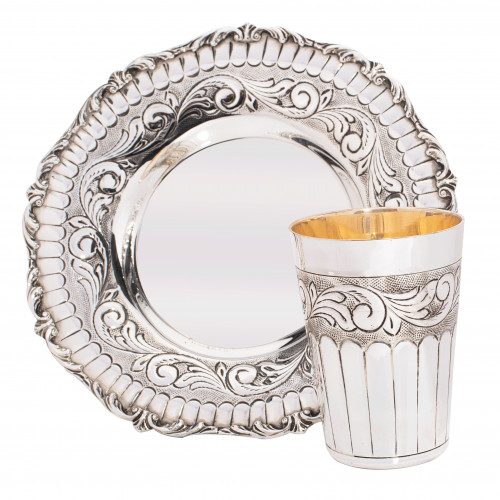
A tray beneath the kiddush cup catches the inevitable drips when the cup is filled to the brim as required by halacha. A matching tray also elevates the visual presentation of the kiddush ritual, making the cup and setting look deliberate and coordinated rather than assembled from separate pieces. This is the most common kiddush set format and is ideal as a wedding or housewarming gift. The Moreshet Silver Dipped Kiddush Cup Set at 1800 Eichlers, engraved with floral or paisley decoration, is a beautiful example: silver-dipped sterling, 3.25 inches tall with a 6-inch matching tray, priced at $210.
Full Kiddush Sets with Multiple Cups
Some sets include a larger central cup for the person reciting kiddush alongside smaller individual cups for family members. While family members can drink from wine poured directly from the bottle, having small matching cups as part of a set creates a unified visual presentation. For the full Shabbat table context, the 1800 Eichlers Judaica department carries kiddush cups alongside wash cups, challah boards, becher plates, bencher holders, and all other Shabbat table essentials. For the end of the meal, see our Birchas Hamazon guide to bentching and choosing benchers.
Children's Kiddush Cups
Children below bar or bat mitzvah age are not halachically obligated in kiddush, but giving a child their own kiddush cup is a widely practiced educational tradition that builds personal connection to the Shabbat ritual from an early age. A child who has their own cup to raise during kiddush participates in a tangible, ownership-based way.
Children's kiddush cups are typically smaller and lighter than adult cups, sized to fit small hands. They are commonly inscribed with "Yeled Tov" (good boy) in Hebrew or "Yaldah Tovah" (good girl), making the cup immediately personal. Silver-plated children's cups are the most traditional choice. The Alef To Tav Ludmir Emanual Pink Hammered Yalda Tova Cup at 1800 Eichlers is a beautiful contemporary option in pink hammered metal at $28. Aluminum children's cups are a practical alternative for younger children who might drop a cup.
A children's kiddush cup makes a meaningful gift for a bris, baby naming, or any occasion marking a child's connection to Jewish life. For full gift ideas across all lifecycle occasions, the 1800 Eichlers Judaica gifts collection covers every milestone and price point.
The Pagum Wine Rule: What Every Family Should Know
A practical halachic point that affects how kiddush functions at the Shabbat table: once the person reciting kiddush takes the first sip from the cup, the remaining wine becomes pagum, meaning blemished. Pagum wine cannot serve others' kiddush obligation directly from that cup.
In practice this means family members should ideally receive wine poured from the original bottle directly into their cups, which is unblemished. Alternatively, adding a small amount of fresh wine from the bottle to the kiddush cup after the first sip restores the cup's status. A kiddush set with multiple smaller cups resolves this entirely: each family member has their own cup filled from the bottle, and the central kiddush cup is the one over which the blessing is recited.
The Kiddush Cup and Havdalah: One Cup for Both
The same kiddush cup can be used for both kiddush and havdalah. Havdalah also requires wine poured into a cup of at least the revi'it minimum and filled generously. The havdalah cup in most traditions is filled to overflowing intentionally, symbolizing abundance and blessing for the coming week, which is why a tray or plate is especially useful during havdalah.
Some families prefer a dedicated havdalah set that keeps the cup, spice box, and candle holder together as a matched collection. Art Judaica's Crystal Havdalah Set, available through the 1800 Eichlers Judaica department, is a new addition at 1800 Eichlers priced at $115.95, combining a crystal kiddush cup with a matching crystal spice box and candle holder. The Waterdale Collection Inspired Havdalah Cup, available in gold and silver at $24, works equally well for a family that wants a designated havdalah cup without a full set.
Design Styles: Matching the Cup to the Home and the Occasion
Beyond material and size, kiddush cups are distinguished by their decorative style. The main design families available at 1800 Eichlers cover every aesthetic from traditional to contemporary.
Classic and Engraved
Classic silver cups with engraved Hebrew text around the rim or body of the cup are the most timeless choice. The Ner Mitzvah Kiddush Cup in a Jerusalem Design at $18 is an accessible entry point. The Ner Mitzvah Silver Plated Kiddush Cup Large at $41.99 is ideal for regular Ashkenazic Shabbat use at the larger shiur requirement. These work in any home aesthetic and are the right choice for a gift intended to be used for decades.
Hammered and Textured
The A&M Judaica Hammered Kiddush Cup at $65.95 exemplifies the hammered finish style: textured surface created by carefully striking the metal, which uses thicker material and hides minor scratches over years of use. Hammered cups are particularly durable and suited to daily Shabbat use.
Crystal and Contemporary
Art Judaica crystal kiddush cups, available in multiple formats ranging from $25.99 to $45, bring a contemporary lightness to the Shabbat table. The Crystal Kiddush Cup with Stem at $41.95 (16 cm height) is elegant enough for special occasions and durable enough for regular use.
Enamel and Color
The David Judaica Stainless Steel Kiddush Sets in Ivory Enamel and Silver Diamonds, both available at $30 to $32, add color to the Shabbat table through enamel accents on the cup and tray. These suits families who prefer a warmer, more decorative aesthetic without the price point of sterling silver.
Cleaning and Care for Silver Kiddush Cups
A silver kiddush cup properly cared for lasts for generations. The care is simple but requires attention to a few specific points.
Rinse the cup with cold water immediately after each use and dry it completely with a soft, lint-free cloth. Do not put a silver cup in the dishwasher. Heat and harsh detergents damage silver and strip interior gold plating. Do not clean with abrasive materials including toothpaste, salt, baking soda, or scouring pads, all of which scratch the surface and accelerate tarnishing.
Silver naturally darkens over time through oxidation. This is normal and does not affect the cup's validity or beauty. A silver polishing cloth or silver-specific liquid polish restores the shine. Always dry the cup completely before storage. Many families store silver pieces in soft velvet pouches in a cool, dry place away from humidity. For seforim and practical halacha books covering the laws of kiddush in depth, the 1800 Eichlers seforim collection carries the full range in English and Hebrew.
Kiddush Cup as a Gift: The Right Cup for Every Occasion
The kiddush cup is one of the most universally fitting Jewish gifts because it is used every single week. A kiddush cup earns its place at the Shabbat table week after week in a way that few other gifts can. That constant presence makes it one of the most meaningful objects in any Jewish home.
Bar and Bat Mitzvah
A sterling silver or quality silver-plated kiddush cup is the classic bar mitzvah gift. The occasion marks the moment the young man becomes obligated in the mitzvah of kiddush, and a cup given at that moment connects the gift directly to the obligation being assumed. Engraving the boy's Hebrew name and the bar mitzvah date adds a personal dimension that makes the cup uniquely his. Many bar mitzvah kiddush cups are still in regular use decades after they were given and are eventually passed to the next generation.
Wedding Gift
A kiddush cup or kiddush set is one of the most fitting wedding gifts in Jewish tradition, because kiddush is recited at every Shabbat and holiday from the couple's first week of marriage onward. A set with a matching becher tray, or the Moreshet Silver Dipped Kiddush Cup Set, is a practical and meaningful choice. For a complete gift for a couple's first home that covers both the doorpost and the Shabbat table, pairing a kiddush cup with a mezuzah from the 1800 Eichlers mezuzah collection is the most complete new home combination.
New Home and Housewarming
A kiddush cup as a housewarming gift establishes Jewish identity in the new space from its very first Shabbat. For a complete new home package, the 1800 Eichlers Judaica gifts collection covers every combination of Shabbat table pieces, mezuzah cases, artwork, and lifecycle items.
Bris and Baby Naming
A children's kiddush cup given at a bris or baby naming is a gift the child grows into. It sits in the home from infancy, becomes the child's Shabbat cup at their first table experience, and may eventually be passed to their own children. Few gifts have that kind of generational trajectory. For mezuzah cases to accompany a new baby's room door, the 1800 Eichlers mezuzah cases collection carries every style from simple plastic to ornate silver.
What Customers Say About 1800 Eichlers
Customers who shop at 1800 Eichlers describe a store with the selection depth and knowledgeable staff that makes choosing the right kiddush cup for the right occasion a clear and confident decision.
Louis R. on Yelp: "The Home Depot of Judaica in the USA. Excellent selection. The owner is always around and you can talk with him personally."
Edward Neiger on Google: "Really great selection, very friendly and knowledgeable staff and good pricing."
Julius Hersh on Google: "Great service, very helpful employees with great prices."
Jeroen Reuven B. on Yelp: "Basically a mahkollet for daily and fancier Judaica. Very good value and service."
A Google reviewer: "Love walking in there. Great service. Has everything I need and organized!"
A longtime customer on @1800eichlers Instagram: "Best store ever. Been ordering from 1800 Eichlers since the 80s!! Mazel tov!"
The store maintains 4.7 stars across 770 reviews. Staff at 1800 Eichlers can advise on cup size for your halachic practice, the right material for your budget and occasion, interior gold plating, the difference between Rav Chayim Naeh and Chazon Ish shiurim, and matching a kiddush cup to a complete Shabbat table set. For the full story of 1800 Eichlers and its history in Borough Park, see the 1800 Eichlers about page.
Where to Buy Your Kiddush Cup
A kiddush cup purchased from a Judaica store where the staff understands the revi'it minimum, knows the practical difference between the Chazon Ish and Rambam measures, can explain what interior gold plating does, and can match the right cup to a bar mitzvah vs a wedding vs a new home occasion, is a more informed purchase than one from a general gift retailer.
1800 Eichlers has been at 5004 13th Avenue in Borough Park, Brooklyn since 1987, serving the Jewish community's Shabbat and holiday needs for generations. The full kiddush cup collection is at 1800 Eichlers kiddush cups, with brands including Art Judaica, Hazorfim, Ner Mitzvah, Waterdale Collection, David Judaica, A&M Judaica, Alef To Tav Ludmir, and more, from under $10 through premium sterling silver sets.
Free US shipping on all orders over $69. Same-day delivery across the tri-state area. Price match guarantee. In-store pickup Sunday through Friday at 5004 13th Ave, Borough Park. Call (718) 874-9771 or WhatsApp 1-800-342-4537.